
If you enjoyed our Like a Boss series, please join us for Open Door. Open Door features personal reflections from local leaders about their career trajectory, management style and lessons they’ve learned along the way. Our Managing Director Stefanie Manning interviews local CEOs and business leaders for a behind the scenes look at their career paths, the ups and downs of running their businesses and the trends shaping them.
Garry Jenkins, President of Bates College sat down with Maine Trust for Local News managing director, Stefanie Manning for a conversation at the Roux Institute at Northeastern University on Wednesday, September 17, 2025 at 8 a.m.
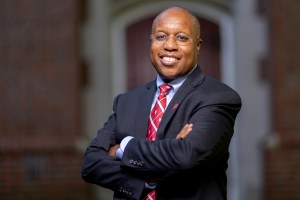
About Garry
Garry W. Jenkins is the ninth president of Bates College. Before joining Bates in 2023, Jenkins was the dean and William S. Pattee Professor of Law at the University of Minnesota Law School for seven years. He previously served as the associate dean for academic affairs and John C. Elam/Vorys Sater Professor of Law at The Ohio State University Moritz College of Law. His research and teaching interests are in law and philanthropy, leadership studies, corporate governance, and civil rights law. He was also chief operating officer and general counsel of the Goldman Sachs Foundation and an attorney with the New York City–based law firm of Simpson Thacher & Bartlett. He began his professional career with Prudential Financial, Inc. Following law school, he clerked on the United States Court of Appeals for the Third Circuit. Jenkins received his bachelor’s degree from Haverford College. He earned a master’s degree in public policy from the Harvard Kennedy School and a juris doctorate from Harvard Law School, where he was editor-in-chief of the Harvard Civil Rights–Civil Liberties Law Review.
presenting SPONSOR

Connecting SPONSORS


supporting SPONSORS


Comments are not available on this story. Read more about why we allow commenting on some stories and not on others.
We believe it's important to offer commenting on certain stories as a benefit to our readers. At its best, our comments sections can be a productive platform for readers to engage with our journalism, offer thoughts on coverage and issues, and drive conversation in a respectful, solutions-based way. It's a form of open discourse that can be useful to our community, public officials, journalists and others.
We do not enable comments on everything — exceptions include most crime stories, and coverage involving personal tragedy or sensitive issues that invite personal attacks instead of thoughtful discussion.
You can read more here about our commenting policy and terms of use. More information is also found on our FAQs.
Show less